Showing posts with label compassion fatigue. Show all posts

Tuesday, April 22, 2014

Compassion: Lessons from Roshi Joan Halifax

by Mary Brandt, MD

It’s not often that a talk completely changes the way I think about something.

I’ve been thinking and speaking about compassion fatigue for many years. I recently had the privilege of hearing a wonderful talk by Roshi Joan Halifax. She made a strong and convincing case that “compassion fatigue” is a misnomer… and that we should think about this in a very different way.

We can never have too much compassion nor can true compassion result in fatigue. 
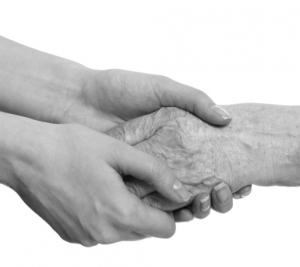


Photo credit

Empathy and compassion are not the same thing.

Empathy is a necessary prerequisite for compassion, but compassion goes beyond empathy. Empathy is the ability to be with someone who is suffering, to be able to feel what they are feeling. Compassion, on the other hand, is being for someone who is suffering, being moved to act and find a way to relieve their suffering.


Link to Roshi Joan Halifax TED talk “Compassion and the true meaning of empathy”


Self-regulation is the key to being able to remain compassionate and this skill can be taught.

We all respond to situations of suffering with “arousal”, a state that varies in intensity depending on the severity of the suffering, and our own memories and experiences. How you respond to this state determines whether you can stay present, effective and compassionate. Roshi Joan Halifax offered the mnemonic “GRACE” as a way to teach this skill to medical students, residents, physicians, nurses and other health care professionals.

G: Gather your attention. Take three deep breaths. Be present.

R: Recall your intention. We choose careers in medicine to help heal the sick and to reduce suffering. It’s not easy to remember this intention when we are overwhelmed. But, in the moment we are faced with a human being who is suffering, we must let our own response (and the demands of the day) go and remember why we are here.

A: Attend to yourself. Being able to detect what is going on in your own body is the same “wiring” you use when you feel empathy. After gathering your attention and recalling your intention, pay attention to what is going on in your body. Watch your breath, feel where there is tension, pay attention to sensations.

C: Consider what will really serve. Moving from empathy to compassion is defined by considering the actions that will relieve suffering. Really consider the person and the situation and decide what is most likely to improve the situation.

E: Engage ethically.

“Developing our capacity for compassion makes it possible for us to help others in a more skillful and effective way. And compassion helps us as well.” Joan Halifax


Photo credit

This post originally appeared January 13, 2014 on Dr. Brandt's website Wellness Rounds

~~~

Mary L. Brandt, M.D. is a professor of Surgery, Pediatrics, and Medical Ethics at Baylor College of Medicine and a practicing pediatric surgeon at Texas Children’s Hospital. She is involved in education on a day-to-day basis in her clinical work. She also thinks about medical education on a bigger scale through her work as Vice Chair of Education of the Michael E. DeBakey Department of Surgery and Associate Dean of Student Affairs at Baylor College of Medicine. She actively blogs and tweets.

Thursday, April 17, 2014

A bit of kindness

by Amalia Cochran, MD

The following is an excerpt from an email I recently received from a mentee:

“I love, love, love surgery, but even as someone who has thrived in this environment, I now acknowledge that there are some aspects of the culture of surgery/academics/surgical and medical education that I am deeply unsettled by and wish very much to change. I see fellow students, residents, fellows, young faculty transform from being full of zeal and goodwill into angry, bitter, jaded people, and it’s absolutely disheartening to see. What’s more infuriating (to me because of the wrongness of it all and because I’m such a fixer) is that those who have been negatively affected and are the very ones capable of enacting positive change because they’ve “been there” sadly become the very ones who perpetuate the indignities of the broken culture, and they don’t even recognize that they’re doing so.”


Her important question that she asked me, and one that I found incredibly wise, was, “Did you ever struggle with this during your training or see this among your colleagues? Or even now?”

I asked her if I could answer this on the blog, and she graciously said yes. It was important for me to do so because I feel obliged to make some confessions related to her concerns.

The biggest one? I had many days during my residency when I was so tired, so broken, so frustrated that I wasn’t a nice person. While I was able to focus on doing the right thing for my patients, I could be and often was impatient with students who needed nurturing and staff who were still learning too. I was so Hell-bent on my own survival, on not making mistakes, on not showing any shred of evidence that I might not be able to succeed as a surgeon that I had no qualms about running over people. I nearly quit surgical residency during my PGY2 year because I didn’t like what I was my self becoming (then was nurtured by some VERY kind mentors who managed to help me hang in there).

I attribute a significant portion of my behaviors when they weren’t outstanding to sleep deprivation and not having a functional set of skills for coping with my chronic exhaustion. I also attribute some of my less-than-ideal behaviors to the surgical culture in which we were supposed to prove that we’re tough and don’t have flaws. Reality check: I may be resilient- I far prefer that word to “tough”- but I do have flaws. Sometime around my 40th birthday, I became okay with that.
  • I want to believe I was asked about this topic because I’m seen as someone who is generally patient and supportive. A few key lessons have helped me get back to this place, one in which I think I existed prior to my 7 years of complete exhaustion and chronic stress.
  • We’re all struggling. Every one of us is, in one way or another. That’s not a source of shame, it’s a source of humanity.
  • If those moments in which your lesser self shows up are rare, people believe you when you apologize for your behavior.
  • We are all learning, ever hour of every day. That’s what we’re here to do in a teaching environment.
  • As someone in a position of leadership, my team and those around my team rely on me to set a tone. I don’t want that tone to be one of nastiness, blaming, and negativity because I want/ need a high-achieving team. Therefore, it’s up to me to be supportive, to be patient, to take a deep breath before reacting, even when my gut wants to say, “WHAT were you thinking?!?”
  • When people are intimidated, their ability to think critically is impaired. Working in an ICU, I need everyone around me to be a critical thinker. Kindness does much more towards that end than bullying.
  • If all else fails, go for a walk with the dog. Dogs are masters of this moment being the very best moment ever and that influence is contagious- particularly on a snowy day if one has a Siberian Husky in their life (as I do).


If nothing else I wrote tonight resonates with you, it’s my hope that a picture of an incredibly happy husky will help you pause and be a bit kinder.

This post originally appeared March 24, 2014 on Dr. Cochran's website Life in the Wild West

~~~

Dr. Amalia Cochran is Associate Professor of Surgery at the University of Utah.  She is heavily involved in undergraduate medical education, serving as the Surgery Clerkship Director and the Director for the Applied Anatomy track for 4th year medical students at the University of Utah.  Her research interests lie in surgical education and in clinical outcomes in burns.  She is completing her term as Vice President for the Association of Women Surgeons. 

Tuesday, April 8, 2014

Failure

by Mary Brandt, MD

Dear Dr. Brandt,
 

I enjoy your blog very much. As a second year medical student, I know that my peers and I all struggle with what we view as ‘failure’ at some point or another. I imagine this problem doesn’t stop (…ever), especially since medicine seems to attract people who hold themselves to extremely high, if not impossible, standards. If you’re looking for topics, I wonder if you might have some insight to offer on how to deal with the downfalls along the way.

Dear Colleague,

It is part of our profession that we will never stop trying to be perfect and – just as true – that we will always fall short. As a student, it tends to be about the tests you are taking and the feeling that you will never study enough. As a resident, it’s the feeling that you don’t know enough to make the decisions you are being asked to make. As a practicing physician, you will at times stay awake at night worrying about your decisions, even when you know you did the best you could. All of this sounds like a huge downside to the profession we’ve chosen, but it’s actually a blessing. One of the core personality traits of physicians is that they care. In a way, all of the stress about not doing well enough happens only because you have empathy and compassion for your patients.

Although it’s hard to believe at the beginning, with time you will realize that the feeling of having “failed” is actually a gift. You’ll discover that “mistakes” and, more importantly, “near misses” become your most valuable teachers. What’s important is that you grasp the opportunity to learn from falling short, rather than beating yourself up. “Failing” at a task (or test) is different than being a “failure.” When you have moments you feel you could have done better, use it as motivation to study a little more, go back to the textbook, look up one more article, or review all the facts again. William Osler, in his famous book to medical students (Osler’s Aequanimitas) talked about keeping a journal of mistakes: “Begin early to make a threefold category – clear cases, doubtful cases, mistakes. And learn to play the game fair, no self-deception, no shrinking from the truth… It is only by getting your cases grouped in this way that you can make any real progress in your post-collegiate education; only in this way can you gain wisdom with experience. “

So, to answer your question about how to deal with the downfalls along the way - Start by revisiting your motivation. Remember why you started down this path in the first place. If you are trying your best to do the right thing, and are humble about the fact that you are human (and will therefore fall short) you can end every day with satisfaction and a sense of accomplishment. That being said, make sure that you work with focus – that when you study or work it is with dedication to the patients and families who are trusting you with some of the most precious decisions of their life. When you fall short, use it as motivation to learn. But, in this process, make sure you are taking care of yourself by taking time for good nutrition, exercise, social interactions and spiritual growth. The worst thing you can do when you feel inadequate is to just work more and more. This leads inevitably to compassion fatigue, which makes you less effective (and will make you suffer). Compassion fatigue is a common diagnosis for care-givers; it happens to every medical student, resident or physician at some point in time. Just like any other diagnosis, the next step is treatment. In a nutshell, the treatment is self-care. Here are few sites that can help you with tips to prevent and treat compassion fatigue:

Top 12 Self-Care tips

Preventing Compassion Fatigue

Do’s and Don’ts of Compassion fatigue

This post originally appeared November 13, 2010 on Dr. Brandt's website Wellness Rounds

~~~

Mary L. Brandt, M.D. is a professor of Surgery, Pediatrics, and Medical Ethics at Baylor College of Medicine and a practicing pediatric surgeon at Texas Children’s Hospital. She is involved in education on a day-to-day basis in her clinical work. She also thinks about medical education on a bigger scale through her work as Vice Chair of Education of the Michael E. DeBakey Department of Surgery and Associate Dean of Student Affairs at Baylor College of Medicine. She actively blogs and tweets.